Recently we found ourselves captivated by the remarkable story behind one of Christianity’s most beloved hymns. On January 1, 1773, in a small English parish church, a congregation sang the words of “Amazing Grace” for the very first time. What makes this moment extraordinary is not just the hymn itself, but the unlikely man who wrote it.
John Newton was perhaps the last person anyone would expect to pen Christianity’s most famous song about grace. His journey from the depths of human depravity to the pulpit of a country church reveals the transforming power of God’s mercy in ways that still inspire believers 250 years later.
The Making of a Wretch
Born in 1725 in London’s bustling shipping district, John Newton’s childhood was marked by loss and abandonment. His devout mother, Elizabeth, filled his early years with Bible stories and hymns. But when tuberculosis claimed her life just before his seventh birthday, young John’s world collapsed.
With his father often away at sea for years at a time, John bounced between relatives and boarding schools. The religious foundation his mother had laid began crumbling under the weight of grief and neglect.
At seventeen, John was forced into service with the Royal Navy aboard HMS Harwich. His rebellious spirit and sharp tongue quickly earned him enemies. When he attempted to desert, the consequences were severe and public. Stripped to the waist and tied to the ship’s grating, he received a brutal flogging in front of the entire crew.
The humiliation drove him to despair. He contemplated both murder and suicide, consumed by rage and self-loathing. To be rid of this troublesome sailor, his captain transferred Newton to a slave ship bound for West Africa. It was here that John Newton’s descent into darkness truly began.
The Atlantic slave trade was among the most brutal enterprises in human history. Newton threw himself into this horrific business with enthusiasm, treating human beings as mere cargo. But in a twist of divine irony, the enslaver would soon become enslaved himself.
In 1745, Newton was abandoned by his crew in West Africa and given to Princess Peye of the Sherbro people. For more than a year, he endured the same treatment he had inflicted on others. Half-starved, chained, and humiliated, Newton truly became what he would later call himself: a wretch.
When Grace Broke Through

March 10, 1748, dawned like any other day aboard the merchant ship Greyhound as it sailed home to England. Newton had been rescued from Africa and was returning with a cargo of beeswax and ivory. But by nightfall, everything had changed.
A fierce Atlantic storm struck with devastating force. Massive waves crashed over the ship’s deck while howling winds tore at the rigging. The vessel’s rotting timbers began breaking apart under the assault. One sailor was swept overboard and lost forever.
As floodwater poured into his cabin, Newton found himself crying out words that surprised even him: “Lord, have mercy on us!” In that desperate moment, a sobering thought struck him. What mercy could a sinner like him possibly expect from a holy God?
“But God demonstrates his own love for us in this: While we were still sinners, Christ died for us.”
Romans 5:8
During the voyage, Newton had been reading “The Imitation of Christ” by Thomas à Kempis. Though he had initially dismissed it as fantasy, the book’s words about God’s mercy began haunting him. As the storm raged, those words took on new meaning.
Miraculously, the storm began to subside. After four harrowing weeks at sea, the battered Greyhound limped into port in Ireland. Newton would mark March 10th for the rest of his life as the day God’s amazing grace first broke through his hardened heart.
Yet He Kept Trading Slaves After Finding God
Newton’s transformation didn’t happen overnight. Divine grace, he would learn, works progressively in the human heart. Remarkably, he continued working in the slave trade for several more years, even captaining slave ships after his conversion experience.
This puzzles many modern readers, but it reveals an important truth about sanctification. God’s grace doesn’t immediately perfect us, but it gradually transforms us as we yield to His Spirit. Newton’s conscience about slavery developed slowly as his faith matured.
In 1750, he married his childhood sweetheart, Mary Catlett, the anchor of his emotional life. Four years later, a severe stroke forced his retirement from the sea at age twenty-nine. This apparent setback became God’s providence.
Working as a customs agent in Liverpool, Newton used his newfound free time to teach himself Latin, Greek, and theology. He immersed himself in Scripture and sought mentorship from evangelical leaders like George Whitefield and John Wesley.
When Newton felt called to ministry, the Church of England initially rejected him for lacking a university degree. But God opened doors through the influence of Lord Dartmouth, who was impressed by Newton’s written testimony of conversion.
In 1764, at nearly forty years old, John Newton was ordained and assigned to the poor parish of Olney in Buckinghamshire. His congregation consisted mainly of lace-makers, farmers, and laborers who worked with their hands. They needed a pastor who understood hardship and could speak hope into their difficult lives.
From Darkness to Light
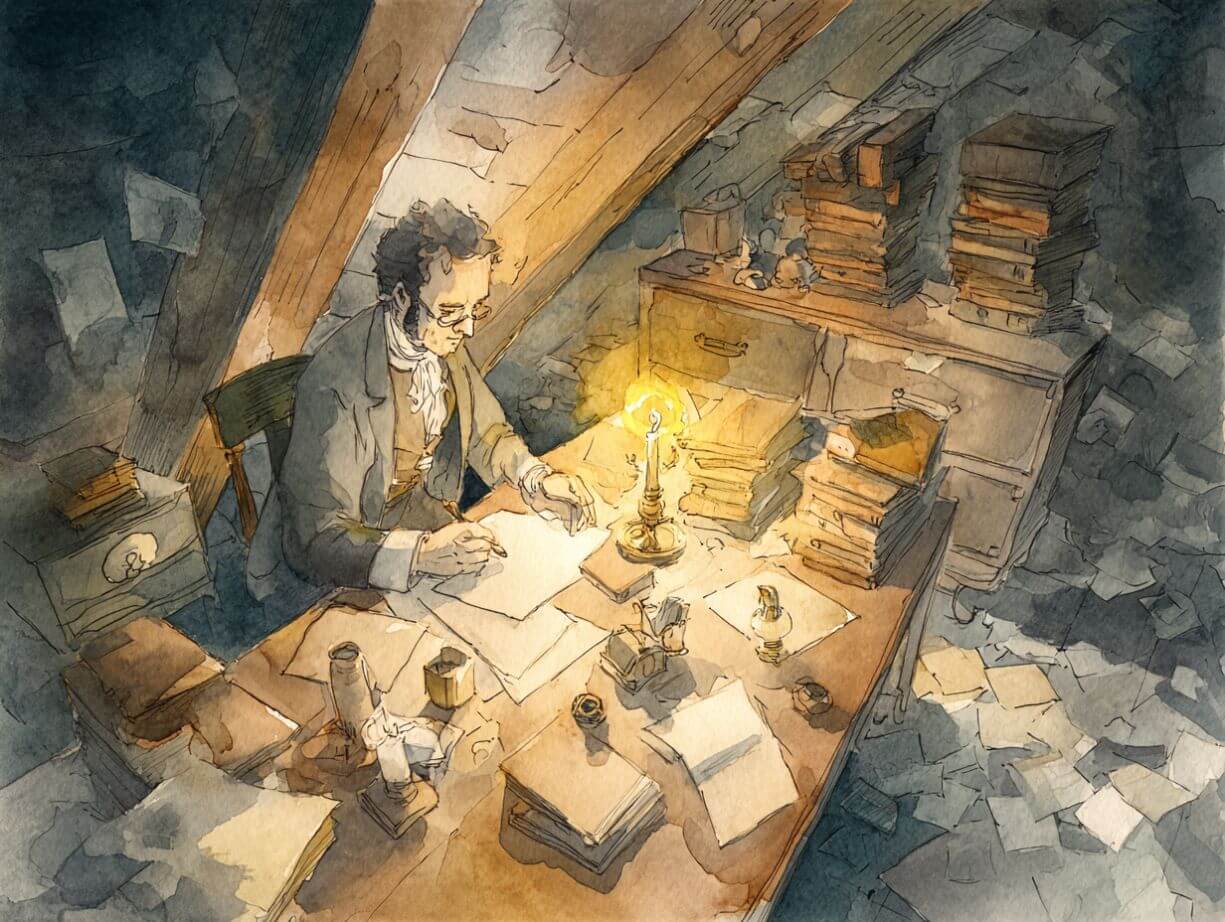
As December 1772 drew to a close, Reverend Newton sat in his attic study preparing for New Year’s Day. His text would be from 1 Chronicles 17:16-17, where King David asks in wonder, “Who am I, O Lord God, and what is my family, that you have brought me this far?”
These words resonated deeply with Newton’s heart. Like David, he had been chosen by God despite his unworthiness. The former slave trader would preach to his humble congregation about looking back at God’s faithfulness and forward to His promises.
As was his custom, Newton composed a hymn to accompany his sermon. He wanted his people to understand that no one falls beyond the reach of God’s grace. Drawing from his own experience of dangers, toils, and snares, he penned these now-famous lines:
Amazing grace! How sweet the sound that saved a wretch like me! I once was lost, but now am found, was blind, but now I see.
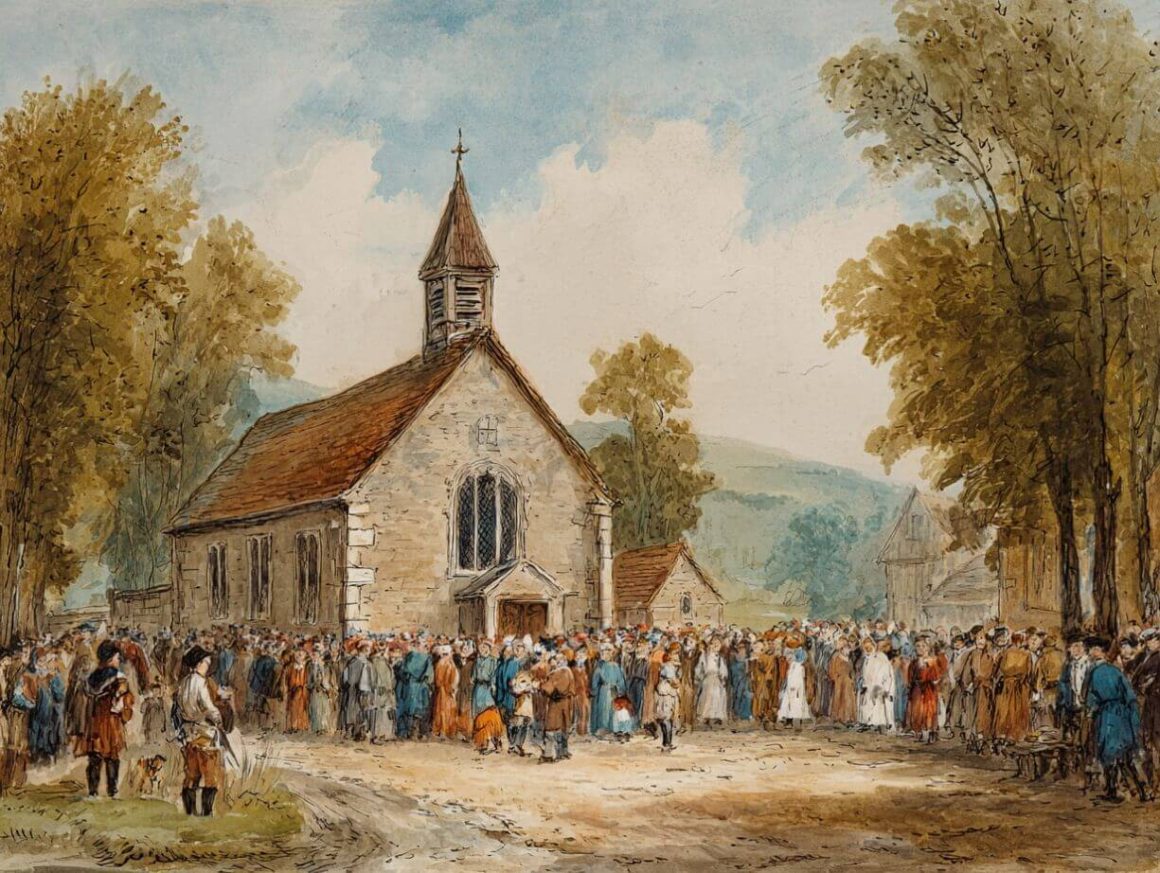
On January 1, 1773, the congregation at St. Peter and St. Paul Church sang Newton’s new hymn for the first time. He had titled it “Faith’s Review and Expectation,” perfectly capturing its dual purpose of remembering God’s past faithfulness while trusting His future provision.
The hymn’s biblical foundation ran deep. David’s prayer of amazement connected to the Prodigal Son’s return and Jesus healing the blind man who declared, “Once I was blind, but now I see!” These scriptural echoes gave the hymn its enduring power.
Six years later, Newton and his friend William Cowper published “Olney Hymns,” which included “Amazing Grace” along with 347 other songs written for their congregation. While the collection became popular in America, “Amazing Grace” itself remained relatively unknown in England for decades.
Lessons From a Transformed Life
Newton’s later years demonstrated the fruit of genuine conversion. As his understanding of God’s heart grew, so did his horror at his former profession. By the 1780s, he had become one of Britain’s most vocal opponents of the slave trade.
His 1788 pamphlet “Thoughts Upon the African Slave Trade” provided a devastating firsthand account of slavery’s brutality. “I hope it will always be a subject of humiliating reflection to me,” he wrote, “that I was once an active instrument in a business at which my heart now shudders.”
Newton became mentor and spiritual advisor to William Wilberforce, encouraging the young politician to remain in Parliament and fight for abolition. When Wilberforce wavered, Newton reminded him that God had placed him in position for such a time as this.
The former slave trader lived to see the British slave trade abolished in 1807, just months before his death at age eighty-two. His epitaph, which he wrote himself, captured his life’s essence: “John Newton, once an infidel and libertine, a servant of slaves in Africa, was, by the rich mercy of our Lord and Savior Jesus Christ, preserved, restored, pardoned, and appointed to preach the faith he had long labored to destroy.”
What This Reveals About God’s Grace
Newton’s story teaches us profound truths about the nature of divine grace. First, no one falls so far that God cannot reach them. The man who seemed utterly lost in moral darkness became a beacon of light for countless others.
Second, God often uses our deepest failures to create our greatest testimonies. Newton’s experience with slavery, both as perpetrator and victim, gave him unique credibility in the fight for abolition. His broken past became the foundation for his ministry of hope.
Third, grace works progressively in our lives. Newton didn’t become perfect overnight, and neither do we. God patiently transforms us step by step, using even our ongoing struggles to shape us into His image.
“Therefore, if anyone is in Christ, the new creation has come: The old has gone, the new is here!”
2 Corinthians 5:17
Most importantly, Newton’s hymn reminds us that grace is both undeserved and undesired. Like Newton during that storm, many don’t seek God until desperation drives us to Him. Yet His mercy reaches us anyway, pursuing us with relentless love.
Every time we sing “Amazing Grace,” we join our voices with millions who have found hope in its promise. From slave ships to rural churches, from civil rights marches to hospital bedsides, these words continue proclaiming that God’s grace truly is amazing.
The wretch who wrote these lines discovered what every believer knows: when grace finds us, everything changes. Our past doesn’t define our future, our failures don’t disqualify us from service, and our worst chapters can become testimonies of God’s transforming power.
Two hundred fifty years after that first New Year’s Day in Olney, John Newton’s hymn still offers the same hope it gave his congregation of lace-makers and laborers. Amazing grace how sweet the sound indeed.